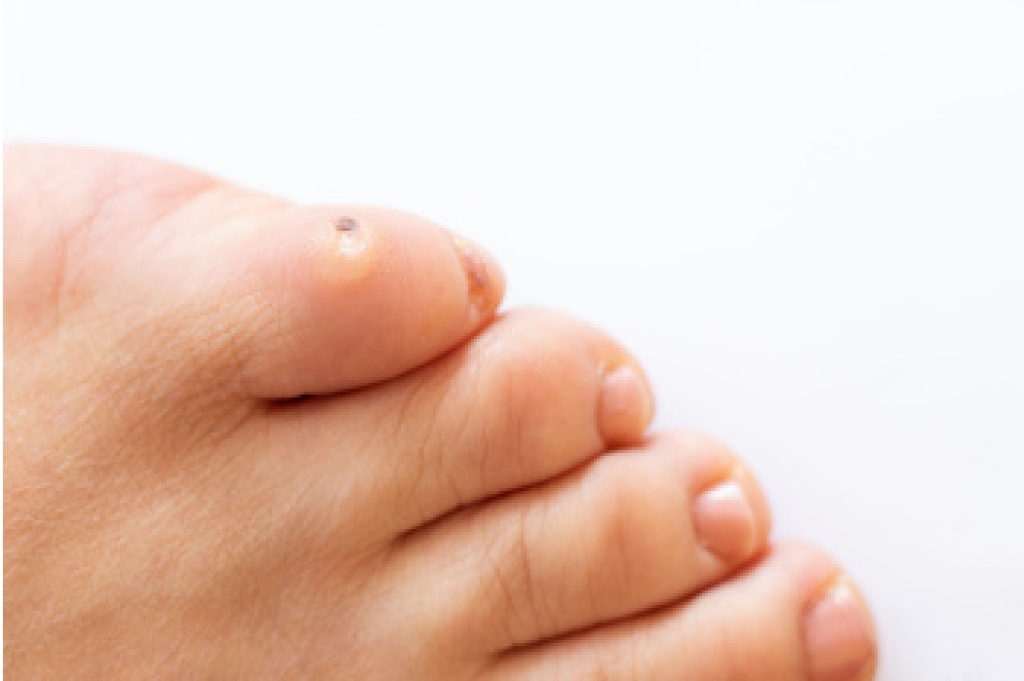
Foot corns are small areas of localized skin thickening that develop when repeated pressure or friction affects the feet. They often appear on the top or sides of toes, between toes, or beneath bony areas. Unlike soft skin, a corn has a firm center that presses into deeper tissue, which can make walking uncomfortable. Common symptoms include tenderness and pain when pressure is applied. Some corns look yellowish or feel hard to the touch. Although corns are not usually dangerous, they can interfere with daily activities when left untreated. Understanding their causes helps you protect your feet and prevent recurring discomfort.
Corns develop as the skin responds to repeated rubbing or pressure by building up extra layers of protective tissue. Wearing high heels pushes body weight toward the front of the foot, increasing pressure beneath the toes. Pointy or narrow shoes may squeeze the toes together and cause friction against the footwear. Other causes include toe deformities, prominent bones, and shoes that do not fit properly. People who spend long hours standing or walking may face a greater risk. Hammertoes and bunions also create pressure points where corns are more likely to form. Corns may become painful because their dense central core presses against sensitive tissue beneath the thickened skin.
Symptoms vary depending on the corn’s location and size. Hard corns commonly develop over toe joints, while soft corns often form between toes where moisture keeps the skin softer. You may notice a raised, thickened area that hurts when wearing shoes or standing for long periods. Redness may develop if the surrounding skin becomes irritated. People with diabetes or poor circulation should take extra care because foot problems may become more serious when sensation or healing is reduced. Reducing pressure early helps prevent skin breakdown.
A podiatrist determines whether a thickened area is a corn or another foot condition, such as a wart. Treatment may include carefully trimming excess hardened skin with sterile instruments and recommending padding to reduce friction. The podiatrist may also suggest wider shoes, protective toe sleeves, or custom orthotics to redistribute pressure. If a toe deformity contributes to repeated corns, additional treatment may be discussed. Keeping footwear comfortable and checking your feet regularly help prevent recurrence. If you have a painful foot corn, it is suggested that you consult a podiatrist for effective relief and prevention tips.
Corns can make walking very painful and should be treated immediately. If you have questions regarding your feet and ankles, contact one of our doctors of Intercoastal Medical Group. Our doctors will treat your foot and ankle needs.
Corns: What Are They? And How Do You Get Rid of Them?
Corns are thickened areas on the skin that can become painful. They are caused by excessive pressure and friction on the skin. Corns press into the deeper layers of the skin and are usually round in shape.
Ways to Prevent Corns
There are many ways to get rid of painful corns such as:
- Wearing properly fitting shoes that have been measured by a professional
- Wearing shoes that are not sharply pointed or have high heels
- Wearing only shoes that offer support
Treating Corns
Although most corns slowly disappear when the friction or pressure stops, this isn’t always the case. Consult with your podiatrist to determine the best treatment option for your case of corns.
If you have any questions, please feel free to contact our offices located in Bradenton, and Sarasota, FL . We offer the newest diagnostic and treatment technologies for all your foot care needs.
